
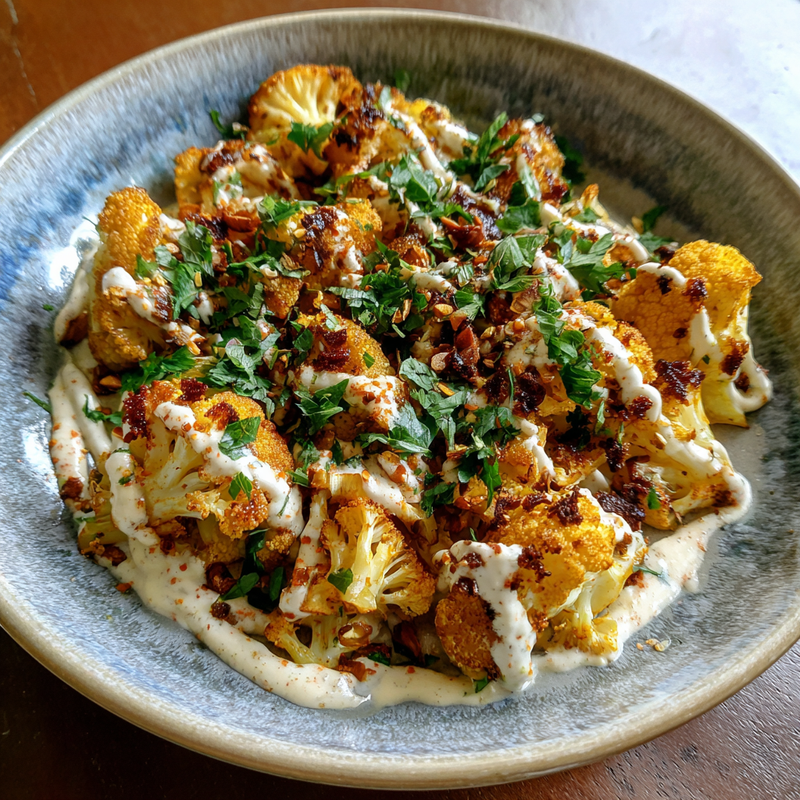
Tired of bland, uninspiring vegetable side dishes that leave your taste buds wanting more? I’ve been there too. Moroccan Cauliflower with Tahini-Honey transforms ordinary cauliflower into a flavor explosion that will have everyone at your table reaching for seconds.
This Middle Eastern-inspired dish delivers the perfect balance of warm spices, nutty tahini, and sweet honey drizzle that makes cauliflower the star of your dinner plate.
Hi there! I’m Alexandra, a self-taught chef who discovered this recipe during my culinary exploration of North African flavors. After years of testing various cauliflower preparations, this Moroccan-spiced version has become my dinner party secret weapon.
The first time I served it to my skeptical vegetable-averse friends, they couldn’t believe cauliflower could taste this good!
In this guide, I’ll walk you through selecting the perfect cauliflower head, creating the ideal spice blend, achieving that perfect caramelization, and answering all your questions about making this dish foolproof. Whether you’re looking for a show-stopping side dish or a vegetarian main, this Moroccan Cauliflower with Tahini-Honey will revolutionize your dinner routine.
Why This Moroccan Cauliflower with Tahini-Honey Recipe Works
- Uses affordable, everyday ingredients transformed with Moroccan-inspired spices
- Roasts in just 25 minutes for caramelized perfection
- Versatile as a stunning side dish or vegetarian main course
- Naturally gluten-free and easily adaptable to vegan diets
- Balances sweet, savory, and spicy notes for maximum flavor impact
- Makes cauliflower exciting even for vegetable skeptics!
Choosing the Right Cauliflower for Moroccan Cauliflower
Best Cauliflower for This Recipe
Look for a medium to large cauliflower head with tight, compact florets and bright white coloring. Avoid heads with brown spots, yellowing, or loose florets, as these indicate age. A fresh cauliflower will feel heavy for its size and have crisp, green leaves attached at the base.
Buying Tips
When shopping for cauliflower, check that the head feels firm and dense. The leaves should look fresh and vibrant—wilted leaves often mean the cauliflower is past its prime. For this Moroccan Cauliflower recipe, size matters less than quality, so choose freshness over volume.
Substitutions
While white cauliflower is traditional, you can create a visually stunning dish using purple, orange, or green cauliflower varieties. Romanesco (with its fractal-shaped florets) makes an especially impressive presentation. In a pinch, you could also substitute broccoli, though you’ll need to reduce the cooking time by about 5 minutes.
Ingredients & Prep for Moroccan Cauliflower with Tahini-Honey
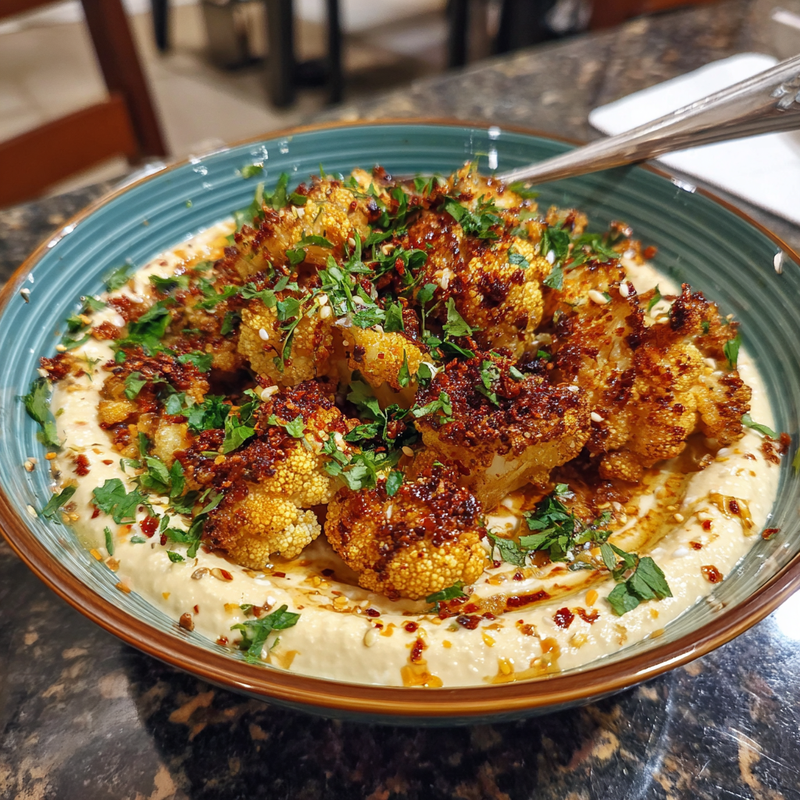
Cauliflower Prep Essentials
For perfectly roasted Moroccan Cauliflower, start by removing the tough outer leaves and cutting out the core. Break or cut the head into uniform florets about 1.5 inches in size consistency is key for even cooking. Wash thoroughly and pat completely dry before roasting (excess moisture prevents proper caramelization).
Moroccan Spice Blend & Coating
- 2 Tbsp olive oil
- 1 tsp ground cumin
- 1 tsp ground coriander
- ½ tsp ground cinnamon
- ½ tsp turmeric
- ¼ tsp cayenne pepper (adjust to taste)
- 2 cloves minced garlic
- Salt and freshly ground black pepper
Combine all spices with olive oil to create a paste that coats each floret evenly.
Tahini-Honey Drizzle Components
- 3 Tbsp tahini paste
- 2 Tbsp honey
- 1 Tbsp lemon juice
- 2-3 Tbsp warm water (to thin consistency)
- Pinch of salt
Whisk these ingredients together until smooth. The sauce should be pourable but thick enough to cling to the cauliflower.
Step-by-Step Moroccan Cauliflower Cooking Instructions
Pre-Cooking Prep for Moroccan Cauliflower
- Preheat your oven to 425°F (220°C) and line a large baking sheet with parchment paper.
- In a large bowl, toss cauliflower florets with the spice and oil mixture until every piece is thoroughly coated.
- Arrange florets in a single layer on the baking sheet, ensuring they don’t touch (overcrowding leads to steaming instead of roasting).
Cooking Method for Perfect Moroccan Cauliflower
- Roast cauliflower for 15 minutes, then flip each piece with a spatula.
- Continue roasting for another 10-15 minutes until edges are deeply caramelized and cauliflower is tender when pierced with a fork.
- While the cauliflower roasts, prepare your tahini-honey drizzle by whisking all ingredients together until smooth.
Doneness Check for Moroccan Cauliflower
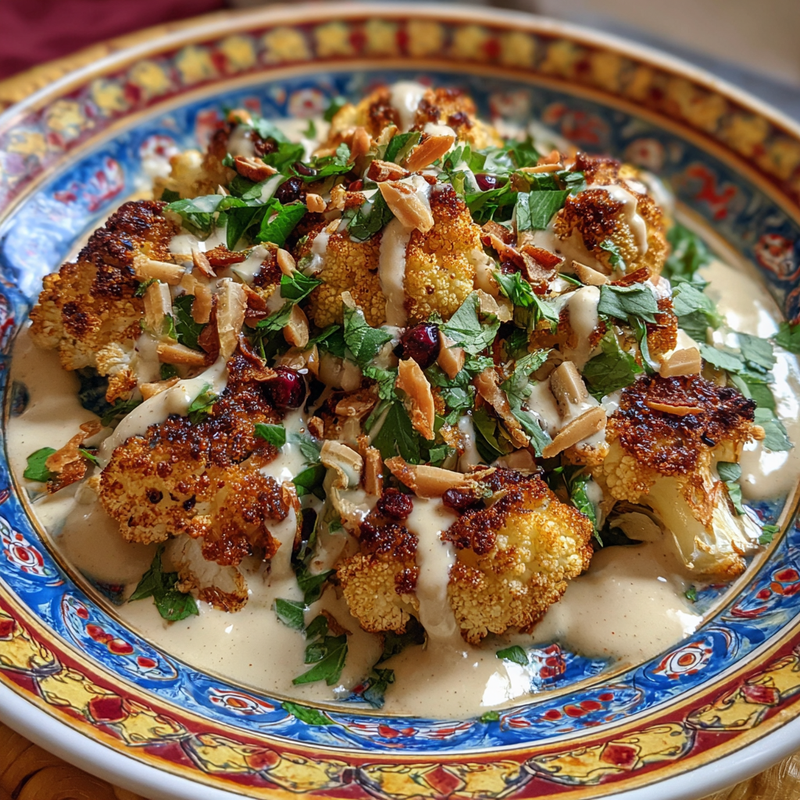
Your cauliflower is perfectly cooked when the edges develop a deep golden-brown color and the florets are tender but not mushy. You should be able to pierce them easily with a fork, but they should still hold their shape.
Resting and Serving Your Moroccan Cauliflower
Let the cauliflower rest for 2-3 minutes after removing from the oven. Transfer to a serving platter, drizzle generously with the tahini-honey sauce, and garnish with fresh chopped herbs (cilantro or mint work beautifully), toasted pine nuts, and a sprinkle of pomegranate seeds for color and texture contrast.
Pro Tips for Perfect Moroccan Cauliflower
Avoiding Soggy Cauliflower
The nemesis of good roasted cauliflower is excess moisture. Ensure your cauliflower is completely dry before roasting. For extra insurance against sogginess, don’t wash the cauliflower right before cooking do it well in advance and let it dry thoroughly. Also, resist the urge to check on it constantly during cooking opening the oven door releases heat and extends cooking time.
Want to see more creative vegetable recipes? Check out my caramelized onion and gruyere tart for another showstopping dish!
Tool Recommendations for Moroccan Cauliflower
A heavy-duty rimmed baking sheet promotes better caramelization than flimsy alternatives. Parchment paper prevents sticking without interfering with browning. For the tahini-honey drizzle, a small whisk helps achieve the smoothest consistency.
Storage & Reheating Moroccan Cauliflower
Store leftover cauliflower in an airtight container in the refrigerator for up to 3 days. Reheat in a 350°F oven for 10 minutes to restore crispness microwaving will make it soggy. Store the tahini-honey drizzle separately and bring to room temperature before serving. This cauliflower also tastes delicious cold in salads!
Looking for more inspiration? Browse my collection of Mediterranean-inspired recipes on Pinterest for more vibrant and flavorful dishes to add to your weekly rotation!
Flavor Variations for Moroccan Cauliflower
Spicy Moroccan Cauliflower Twist
For heat lovers, double the cayenne pepper and add ½ teaspoon of harissa paste to the spice mixture. For an extra kick, finish the dish with a sprinkle of Aleppo pepper flakes just before serving.
Dietary Adaptations for Moroccan Cauliflower
Make this recipe vegan by substituting maple syrup for honey in the tahini drizzle. For a keto-friendly version, replace the honey with a sugar-free alternative like monk fruit syrup or simply omit the sweetener and add an extra squeeze of lemon juice for brightness.
Global Flavor Inspirations for Cauliflower
| Flavor Profile | Spice Modifications | Sauce Adaptations | Garnish Suggestions |
|---|---|---|---|
| Indian-Inspired | Add garam masala, turmeric | Yogurt-based raita | Fresh cilantro, toasted cumin seeds |
| Mediterranean | Use oregano, thyme, rosemary | Lemon-garlic aioli | Olives, feta crumbles |
| East Asian | Include five-spice powder | Sesame oil-based dressing | Scallions, sesame seeds |
| Mexican-Inspired | Add chili powder, oregano | Lime crema | Cotija cheese, cilantro |
Serving Suggestions for Moroccan Cauliflower with Tahini-Honey
Turn this Moroccan Cauliflower into a complete meal by serving it over fluffy couscous or quinoa that will soak up the delicious tahini-honey sauce. For a heartier presentation, add crispy chickpeas roasted with the same spice blend.
For a Middle Eastern-inspired feast, serve alongside Greek-style lemon potatoes and a simple cucumber-tomato salad. A cooling yogurt-based tzatziki provides a nice temperature and flavor contrast to the warm, spiced cauliflower.
For beverages, an unsweetened iced mint tea complements the Moroccan flavors beautifully. If you prefer something warming, a cardamom-spiced coffee makes an excellent finish to the meal.
FAQs About Moroccan Cauliflower with Tahini-Honey
Can I prepare Moroccan Cauliflower in advance?
You can prep the cauliflower and spice mixture up to 24 hours in advance, storing them separately in the refrigerator. The tahini-honey sauce can be made up to 3 days ahead and thinned with a little warm water if it thickens during storage. For best results, roast the cauliflower just before serving.
Why is my Moroccan Cauliflower not caramelizing?
Three common culprits: your oven temperature is too low, the cauliflower pieces are too crowded on the baking sheet, or the cauliflower was too wet before roasting. Make sure your oven is fully preheated, use two baking sheets if necessary, and thoroughly dry your cauliflower before coating with spices.
Can I make this Moroccan Cauliflower in an air fryer?
Yes! Cook at 380°F for about 12-15 minutes, shaking the basket halfway through. You may need to work in batches depending on your air fryer size. The results will be extra crispy, though you might lose some of the spice coating in the process.
Conclusion
Moroccan Cauliflower with Tahini-Honey proves that humble vegetables can become the most memorable part of your meal with the right treatment. The aromatic spices, caramelized edges, and creamy-sweet tahini drizzle create a flavor experience that’s both comforting and exotic.
I hope you’ll give this recipe a try the next time you’re looking to elevate your dinner table. The techniques you’ll learn from proper vegetable roasting to balancing complex flavors will serve you well beyond this single dish.
Ready for more Mediterranean-inspired magic? Check out my caramelized onion gruyere tart for another crowd-pleasing recipe that transforms simple ingredients into something extraordinary
Print
Moroccan Cauliflower with Tahini-Honey: The Best Way to Spice Up Dinner
- Total Time: 40 mins
- Yield: 4 servings 1x
Description
This Moroccan Cauliflower with Tahini-Honey is a flavorful roasted dish featuring spiced cauliflower florets drizzled with a creamy, sweet-savory tahini-honey sauce a perfect side or plant-based main bursting with North African flair.
Ingredients
1 large head cauliflower, cut into florets
3 tbsp olive oil
1 tsp ground cumin
1 tsp smoked paprika
1/2 tsp ground turmeric
1/2 tsp ground coriander
1/4 tsp cinnamon
1/2 tsp salt
1/4 tsp black pepper
**Tahini-Honey Sauce:**
1/4 cup tahini
2 tbsp lemon juice
1 tbsp honey (or maple syrup for vegan)
1 small garlic clove, minced
2–3 tbsp warm water (to thin)
Pinch of salt
**To Serve:**
2 tbsp chopped fresh parsley
1 tbsp toasted sesame seeds
Lemon wedges
Instructions
1. Preheat oven to 425°F (220°C) and line a baking sheet with parchment paper.
2. In a large bowl, toss cauliflower florets with olive oil, cumin, paprika, turmeric, coriander, cinnamon, salt, and pepper until evenly coated.
3. Spread cauliflower on the prepared baking sheet in a single layer.
4. Roast for 25–30 minutes, flipping halfway through, until golden and crisp at the edges.
5. Meanwhile, whisk together tahini, lemon juice, honey, garlic, and warm water until smooth and creamy. Adjust consistency by adding more water as needed.
6. Once cauliflower is roasted, transfer to a serving platter.
7. Drizzle generously with the tahini-honey sauce.
8. Garnish with chopped parsley, sesame seeds, and a squeeze of lemon juice before serving.
Notes
For extra flavor, add a sprinkle of harissa or chili flakes before roasting.
This dish pairs beautifully with couscous, quinoa, or roasted chickpeas.
Leftovers can be served cold as a salad the next day.
- Prep Time: 10 mins
- Cook Time: 30 mins
- Category: Side Dish
- Method: Roasted
- Cuisine: Moroccan
Nutrition
- Serving Size: 1 cup
- Calories: 190
- Sugar: 6g
- Sodium: 260mg
- Fat: 14g
- Saturated Fat: 2g
- Unsaturated Fat: 12g
- Trans Fat: 0g
- Carbohydrates: 14g
- Fiber: 4g
- Protein: 5g
- Cholesterol: 0mg
Keywords: Moroccan cauliflower, tahini honey sauce, roasted cauliflower, Middle Eastern side, vegetarian dish